
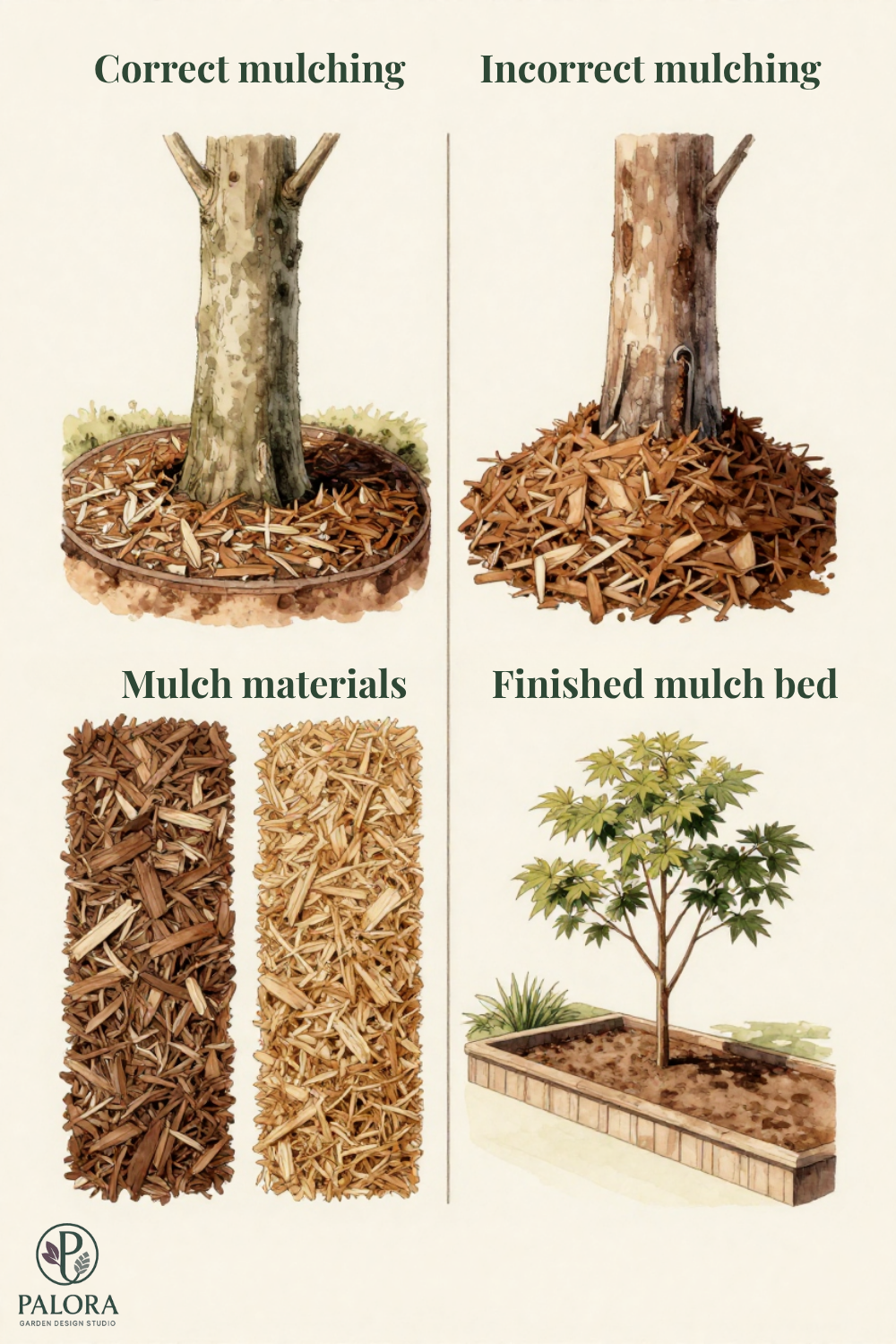
Mulching Japanese Maples: Depth, Material, and the Volcano Mistake
Proper mulch protects Japanese maple roots, regulates moisture, and finishes the garden visually — but depth and placement matter. Learn why 2–3 inches is ideal, how to avoid the damaging “mulch volcano,” and which mulch materials perform best in Zone 7 gardens.
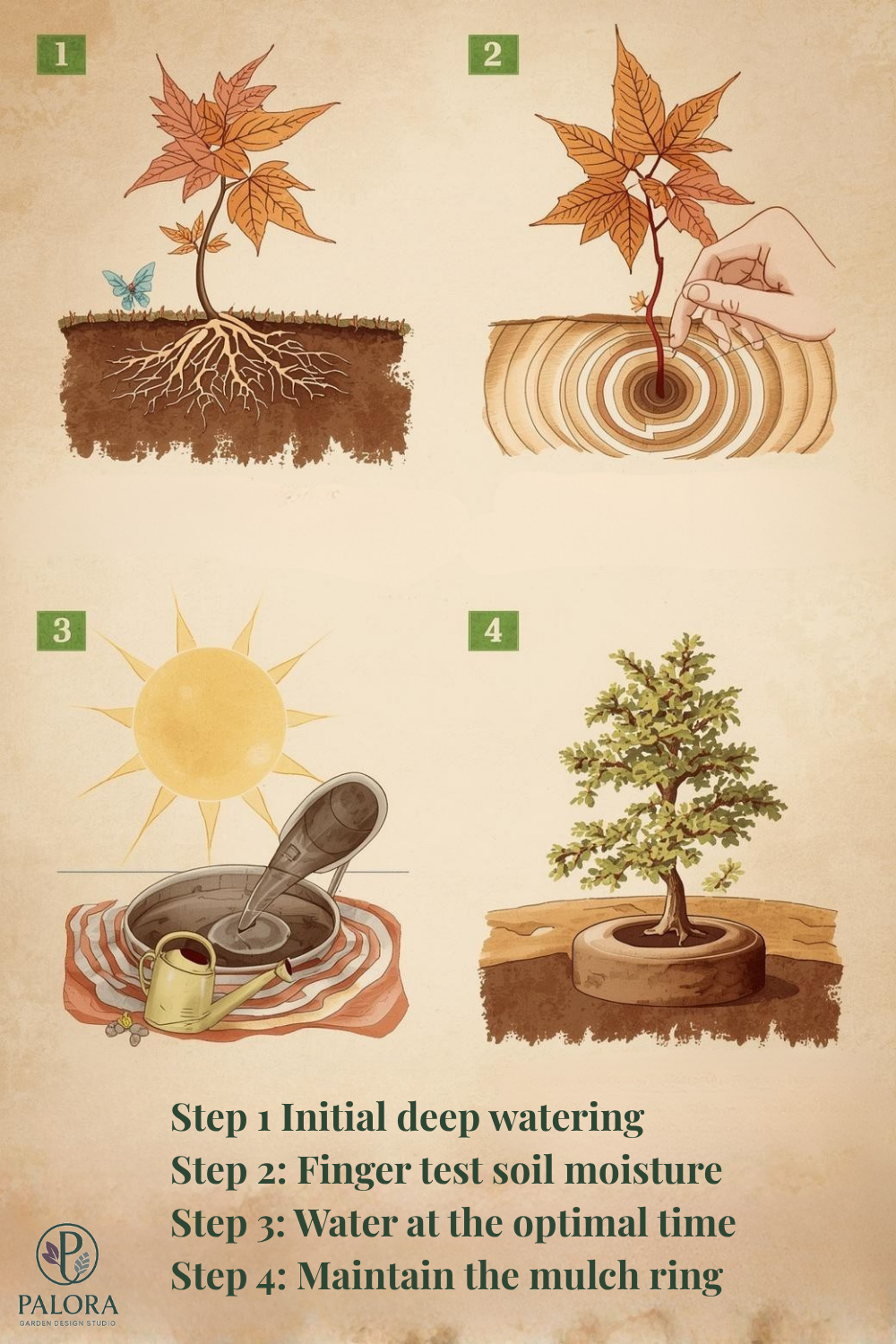
Watering Newly Planted Japanese Maples in Zone 7: The First-Summer Protocol
Proper watering during the first 90 days determines how well a Japanese maple establishes in Zone 7. Learn how to water deeply, manage clay soil moisture, apply mulch correctly, and build strong root systems that support healthy long-term growth.
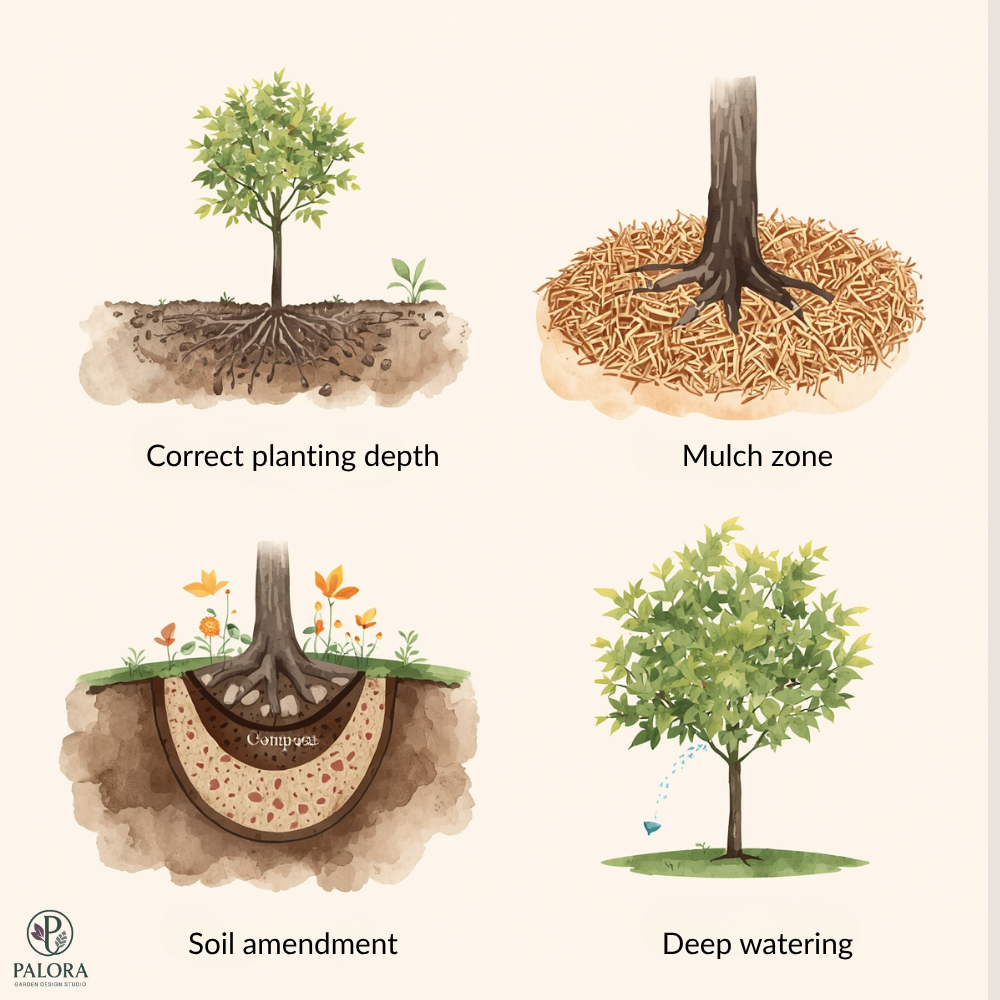
How to Plant Japanese Maples in Clay Soil: A Zone 7 Guide
Japanese maples can thrive in clay soil when planted correctly. In Zone 7b and the DC Metro area, the real issue is not clay itself, but poor drainage and root suffocation caused by planting too deeply or trapping water around the root ball. This guide explains how to prepare clay soil, plant slightly above grade, mulch properly, and water deeply without creating constant saturation — helping maples establish strong, healthy root systems that endure Mid-Atlantic summers and heavy rain cycles.

Morning Sun vs Afternoon Sun for Japanese Maples (How to Prevent Leaf Scorch in Zone 7)
Japanese maples love sunlight — but the wrong kind can damage their delicate foliage. Learn how morning and afternoon sun affect Japanese maples and how to prevent leaf scorch in Zone 7 gardens.
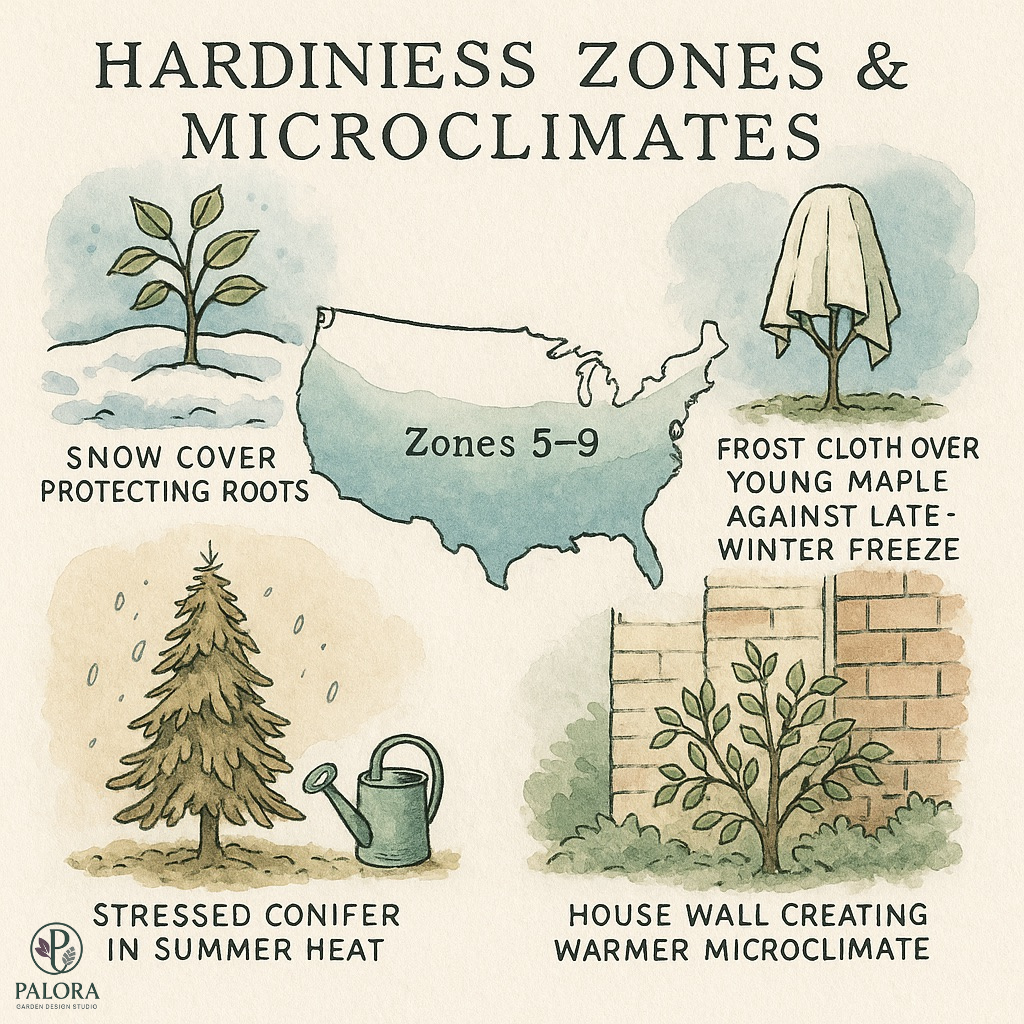
Hardiness Zones & Microclimates: Choosing What Truly Thrives
🧭 Gardening with Confidence Across Zones, Microclimates, and Seasons
Hardiness zones are only the beginning. The USDA map tells us the coldest temperatures we might face, but it doesn’t reveal how microclimates, late frosts, or scorching summers shape real gardens. At Palora, we design palettes with both science and lived experience — offering confidence where rare specimens can thrive, and wisdom for stretching gracefully beyond the map.